
2026.03.16
EXHIBITION 19
“GAMORI”
MASAYOSHI SUZUKIand wander journal #95
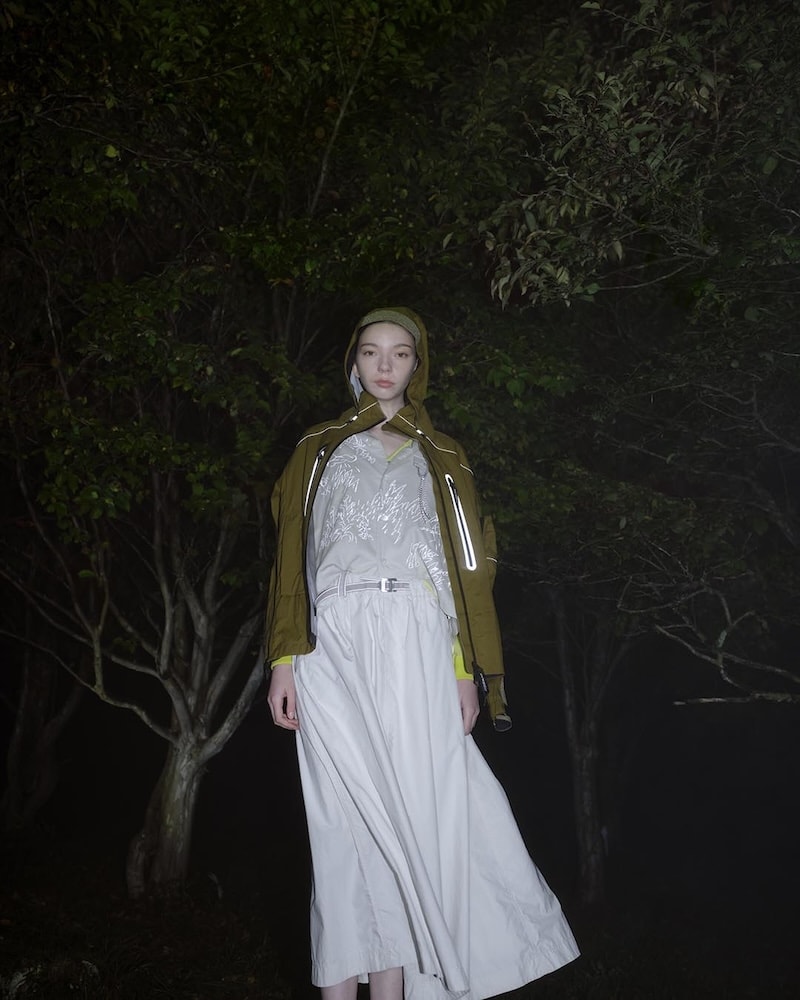
and wander SS26 Collectionでは、ペインターであり音楽家でもあるMASAYOSHI SUZUKIのドローイングを取り入れたアイテムが登場します。Tシャツやエンブロイダリーシャツ、ウィンドジャケットなどに展開されたドローイングは、電子音楽と自然音から生まれた独特の存在感。その制作背景を探るため、制作拠点でありショップスペースも併設する実験場「Studio P.R.O」を訪ね、今回の作品や展示についてお話をうかがいました。
「GAMORI」
MASAYOSHI SUZUKI
会期:2026年3月20日(金)~26日(木)
11:00〜20:00 ※最終日は17:00まで
場所:and wander MARUNOUCHI 内 and wander OUTDOOR GALLERY
東京都千代田区丸の内3-3-1 新東京ビル1F
and wander’s SS26 Collection showcases drawings by painter and musician, Masayoshi Suzuki. His unique drawings, which feature on T-shirts, embroidered shirts and wind jackets, are born from a synergy between electronic music and natural sounds. I visited Suzuki at his experimental independent studio “Studio P.R.O”, to learn about his creative process and ask him about his artwork and this exhibition. This studio serves as his creative base while also having an adjoining shop space.
「GAMORI」
MASAYOSHI SUZUKI
Friday March 20 ~ Sunday March 29, 2026
11:00~20:00 (closes at 17:00 on the last day)
Venue: and wander MARUNOUCHI, and wander OUTDOOR GALLERY
1st floor, Shin-Tokyo bldg., 3-3-1 Marunouchi, Chiyoda, Tokyo
INTERVIEW
――今回のコレクションでは、鈴木さんのドローイングを元にデザインされています。このドローイング、アートワークはどのように生まれたのでしょうか。
SUZUKI:and wanderは、山や自然を大切にし、その楽しさを伝えるブランドだと思っています。だからといって、山や川などのモチーフを直接的に描くことには違和感がありました。自分なりのアイデアを込めないとつまらないものになるだろうなと。だから今回は、and wanderのデザイナーの森 美穂子さんがもともと僕の作品の性質をよく知ってくれていることもあって、僕のほうから“こういうことをやりたい”とプレゼンしました。
――それはどんなプレゼンだったんでしょう。
SUZUKI:絵を描き進める前に音をまずスケッチしました。そこから自然と都市の関係値みたいなところに落とし込めたら、ちょっと違うものを作れるんじゃないかって。作った音をお渡しして「この雰囲気でやります」とプレゼンしました。音は目では見えないけれど、イマジネーションを膨らませてくれるものでもある。森さんもそれをおもしろいと思ってくれて、音楽のイメージをもとに、そこから詩やグラフィックに展開するという方法で今回のドローイングが生まれました。
――音源制作はどのように進めるのですか。
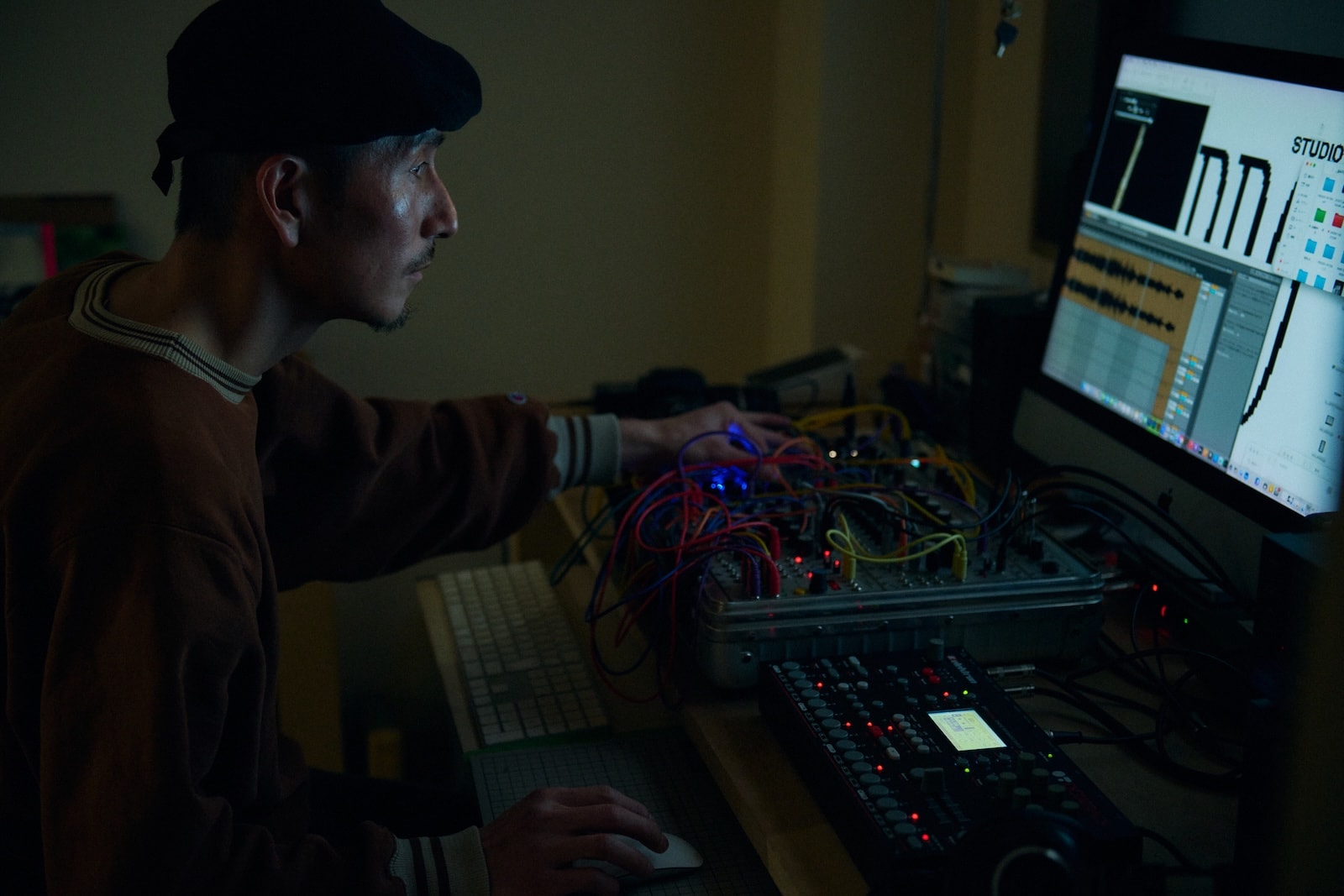
SUZUKI:今回使っているのは、古いRIMOWAを改造したユーロラック(モジュラーシンセ)とサンプラー。モジュールにはそれぞれに特性があって、それを好きなように配線して電圧を調整しながら直感的に音作りをします。これは自分にとってパレットと絵の具のようなもので、キャンバスに向かう時と極めて近い感覚で制作しています。今回and wanderのために制作した音源は、自然の中のサウンドスケープに聞こえる様なオーガニックな電子音にフィールドレコーディングを重ねたものです。
INTERVIEW
――This collection was designed based on your drawings. How did these drawings and artwork come into being?
SUZUKI: I believe that and wander is a brand that values nature and mountains, and expresses the joy we get out of them. But, to simply represent this by literally drawing mountains and rivers did not feel right to me. I thought that, unless I can incorporate something of myself into these designs, the result would be mundane. and wander designer, Mihoko Mori, already knew my work well, and so I actually went to her to present what I wanted to do.
――What sort of presentation was it?
SUZUKI: Before making my drawings, I sketched the sounds. My thinking was that, if I can find a synergy between nature and cities, I’ll be able to create something new. I handed her the soundtrack I’d made and said, “I’d like to do something like this”. Although you can’t see sound, it triggers your imagination. Ms. Mori appreciated this, and these drawings were created by using music as a creative foundation and developing sounds into poems and graphics.
――How did you create the audio recordings?
SUZUKI: For this recording I used a Eurorack (modular synthesizer) built into a modified vintage RIMOWA case along with a sampler. Each module has its own character, so by patching them just the way I like, and adjusting the voltage, I can let my intuition shape the sounds. The modules are like a palette and paints, and the creative process feels very similar to when I’m working on canvas. The sounds I created for and wander are made by layering organic electronic notes that sound like natural soundscapes, onto field recordings.
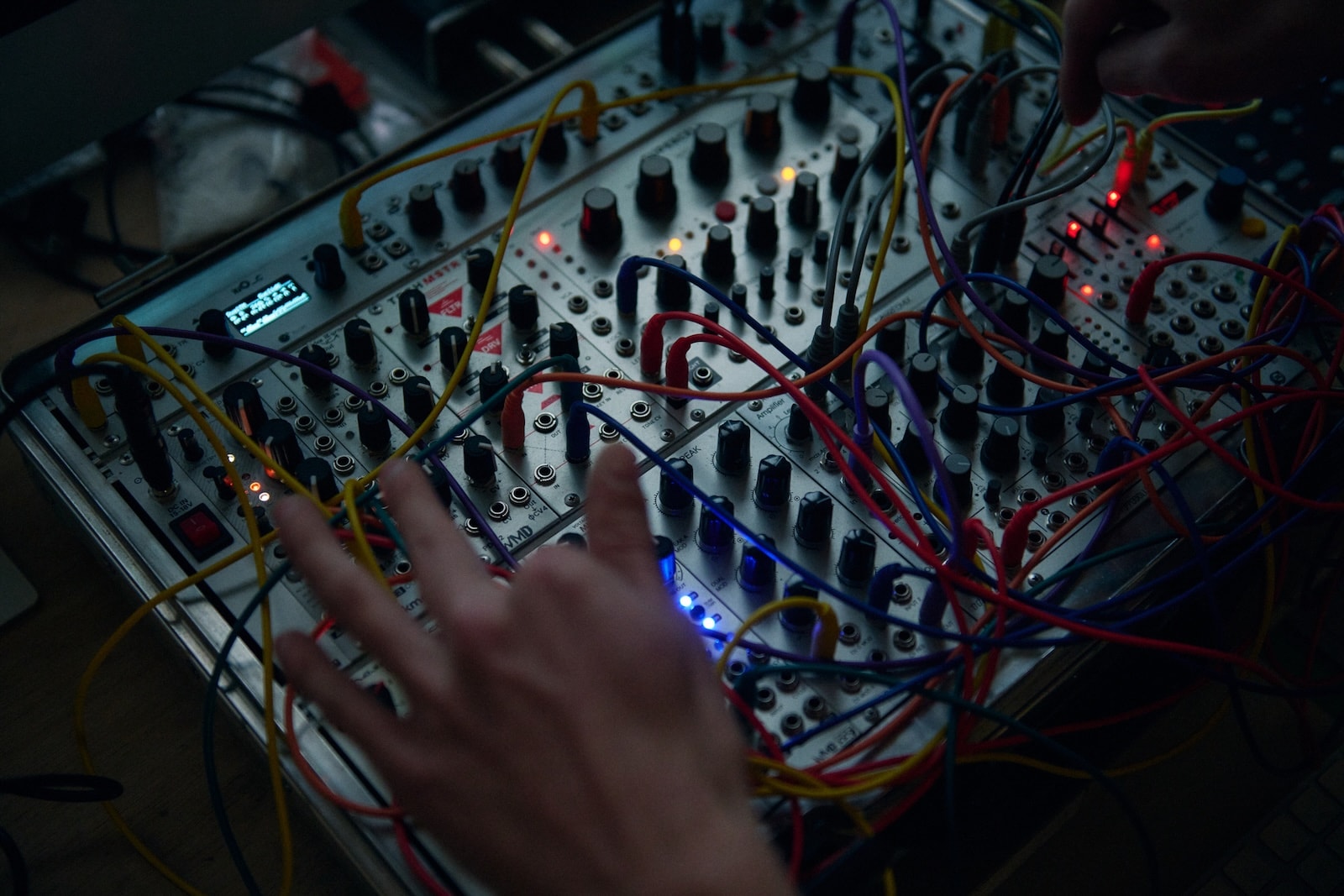
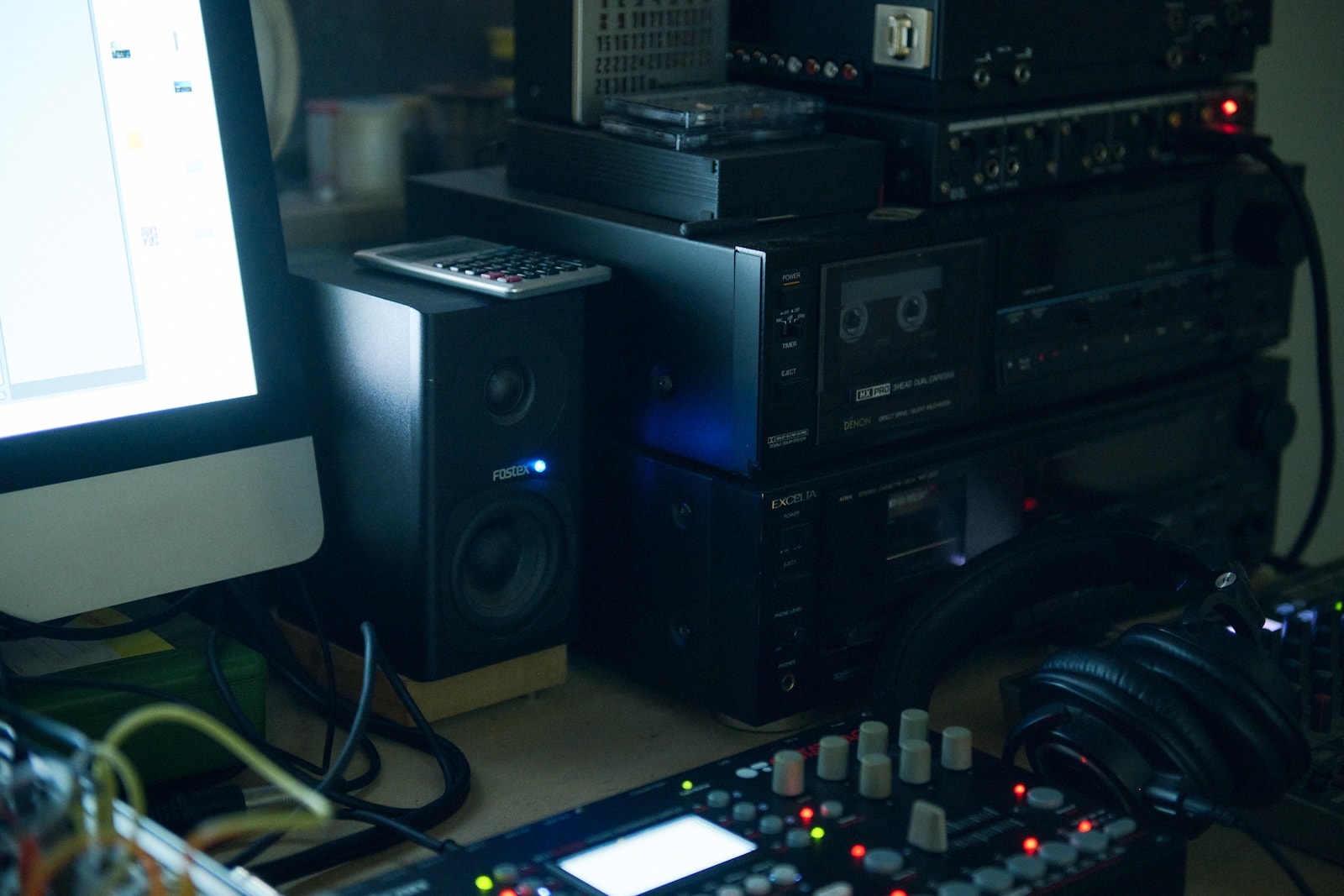
モジュラーシンセサイザーが生み出す、生成的かつランダムな音楽表現。「この音は、森の中で聴く風の音、雨音、鳥の囀りのありかたにすごく近い」。そこに、自然のなかで集音したせせらぎ、葉擦れ、虫の声などの音調を掛け合わせた音源がドローイングのスタートとなった。
The modular synthesizer creates generative and random sounds. And then I find that a certain sound “is very close to the sound of wind in the trees, or the sound of rain, or birdsong”. Finally, I superimpose these electronic sounds onto sounds I’ve recorded in nature, like trickling water, rustling trees, or insects, and this becomes the starting point for my drawings.
――電子音楽と自然の音から生まれたいくつものドローイングを組み合わせて、この図柄が生まれたのですね。抽象的にも見えますが、根底には自然と都市の関係性が含まれているという。
SUZUKI:そうですね。図案化する際、特に夜の森の中というイメージを強く持っていました。その意図をしっかりとすくってくれたと思います。
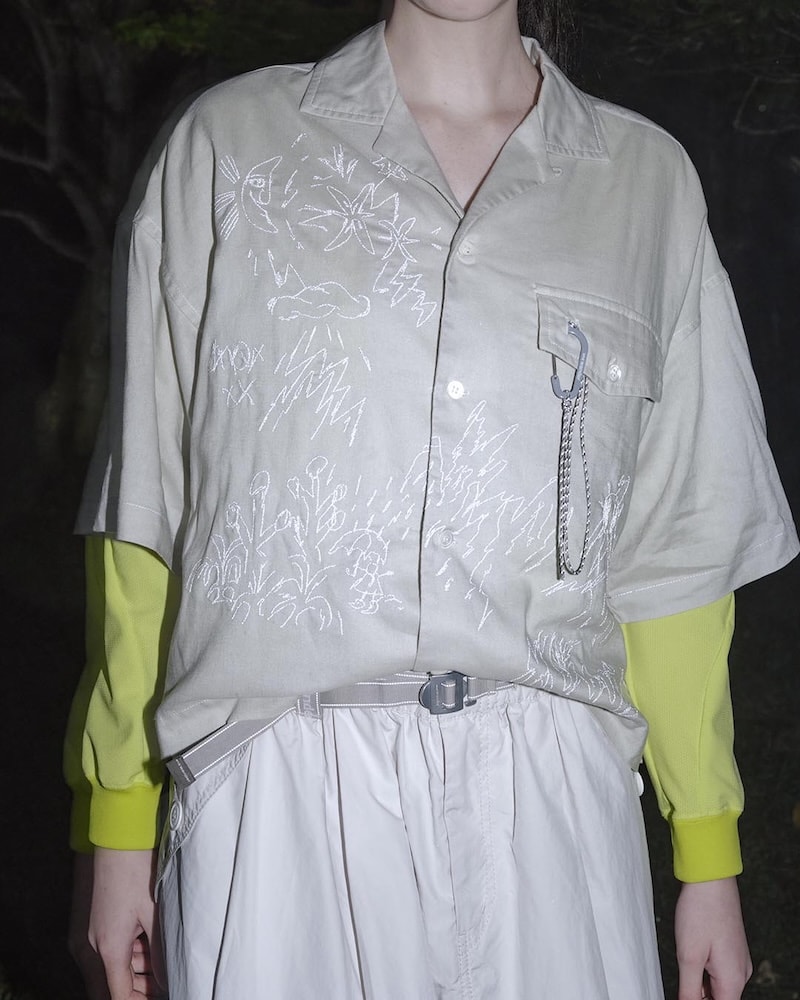
――エンブロイダリーシャツには、三日月や雨、草花、動物を行ったモチーフが刺繍されています。こちらは、逆に具体的ですね。
SUZUKI:元々、ラフなドローイングやコミックアート的な表現が好きなんです。その上で今回、自然の中での音の成り立ちを刺繍で表現するにはどうしようかなと考えて、「モビール化」すればいいんじゃないだろうか、と。見てもらうと、上の方に月があって、それが星たちと連結している。雲からは雷鳴が鳴り、それを受けて植物たちは雨に手を伸ばす。風と雨の象徴のような鳥みたいなものがいるんですけど、これが降らせた雨が傘に当たる。動物たちは傘を宿にして……、みたいにモチーフが下へ下へとモビールみたいに繋がっているんです。刺繍してもらうときも、ステッチが単調にならないように、糸がだまになっていたりとか、あえて有機的な無駄が生まれるようにとお願いしました。
――So, these designs were created by combining electronic music and the sounds of nature. They look abstract, but they are based on a connection between nature and cities.
SUZUKI: Yes… I had a particularly strong image of the forest at night when I was doing the design. I hope that intention came through well.
――On the other hand, the embroidered shirts feature quite concrete motifs, such as a crescent moon, plants, flowers and animals.
SUZUKI: I’ve always liked the creative expression in rough sketches and comic art. With that in mind, for this exhibition I thought about how I could express the formation of sound in nature through embroidery, and I thought, why not make it like a hanging mobile? If you look closely, you can see there’s a moon at the top, connected to the stars. And then you can see the thunder coming from the clouds, and the plants are reaching up towards the rain. There’s also a sort of bird, which symbolizes the wind and rain, and the rain that it brings falls onto an umbrella. The animals are sheltering under the umbrella… so you can see how the motifs connect downwards, like a mobile. When the actual embroidering was being done, I asked them to make sure that organic superfluity was intentionally included by letting the thread sometimes bunch up or form small knots, to ensure that the stitches are not too monotonous.
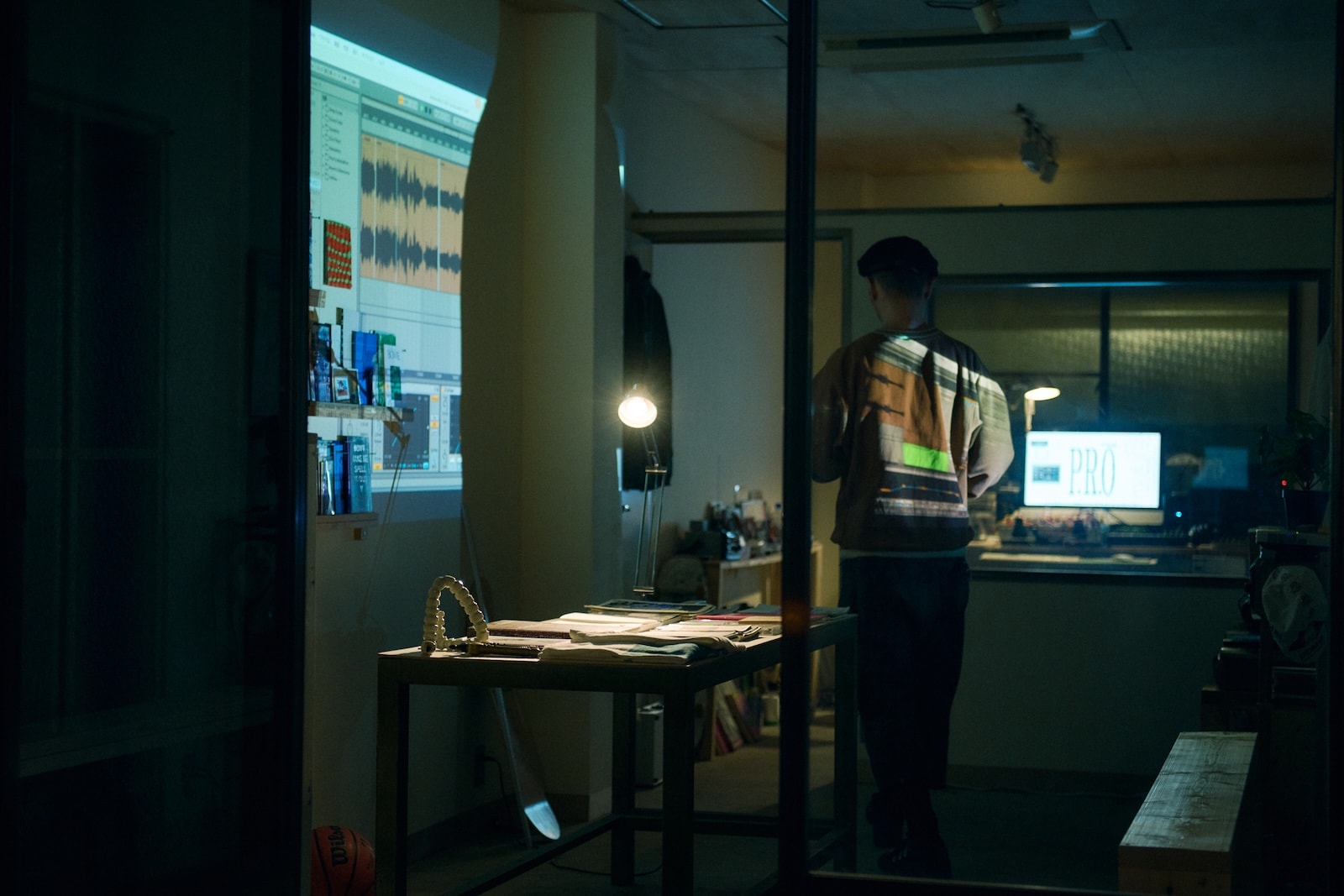
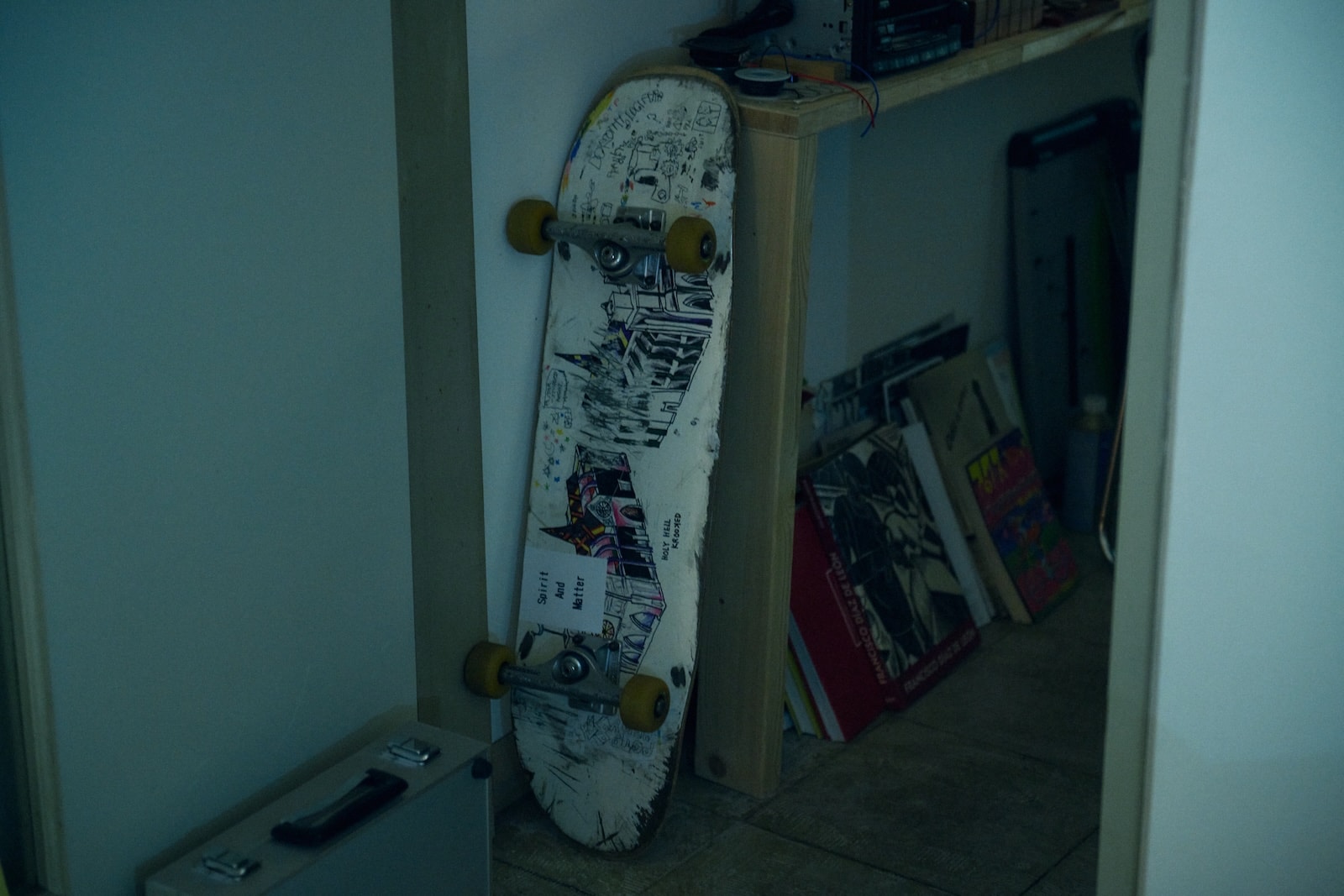
樹脂加工工場の跡地を改装した制作拠点「Studio P.R.O」。ショップスペースには鈴木が編集したZINEやカセットテープ、写真集が並ぶ。ときにはフィルム上映やトークイベントも。
Suzuki’s creative base, “Studio P.R.O”, is a refurbished resin processing factory. Zines that Suzuki edits and cassette tapes and photography collections line the shelves in the shop space. Film screenings and talk events are also occasionally held here.
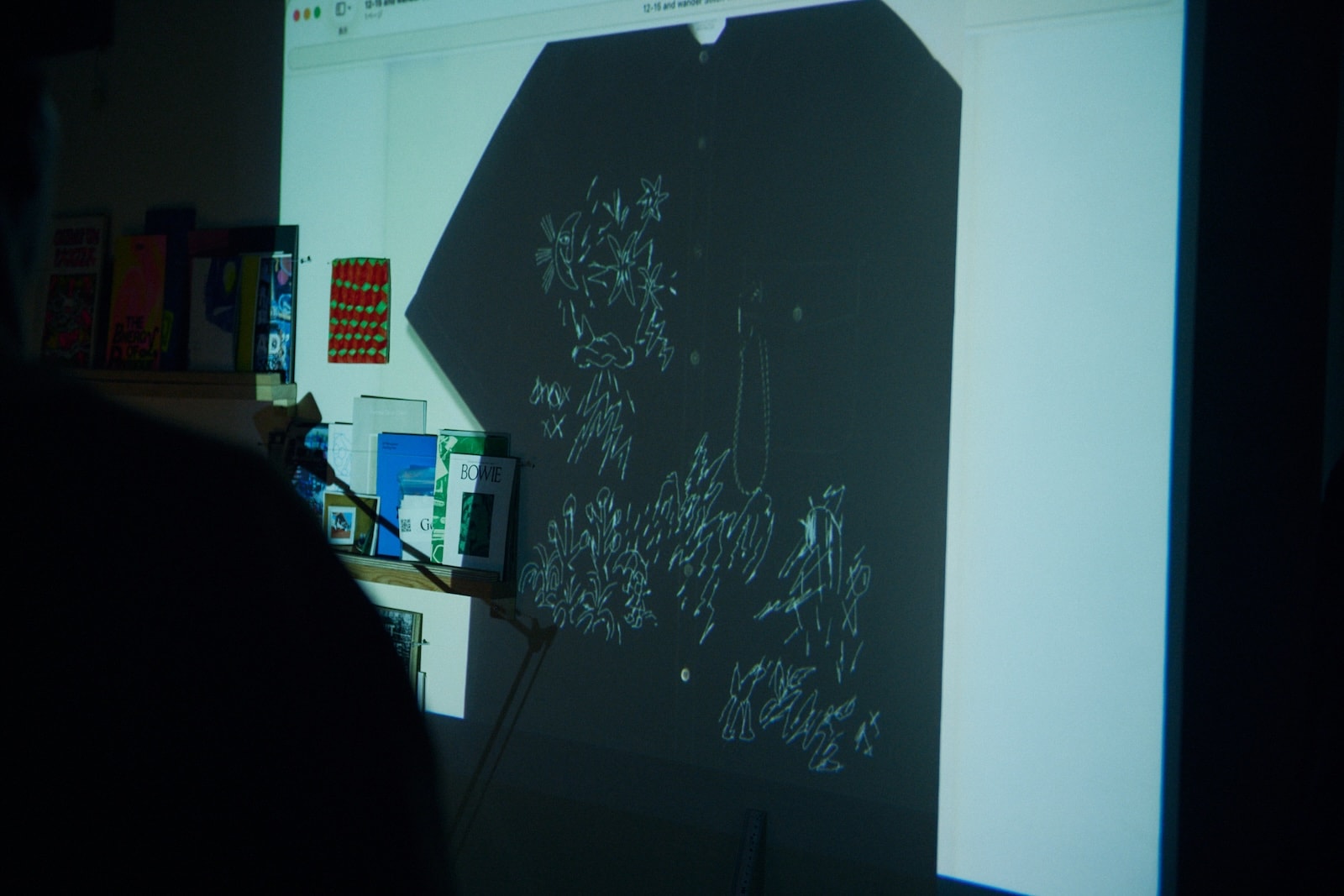
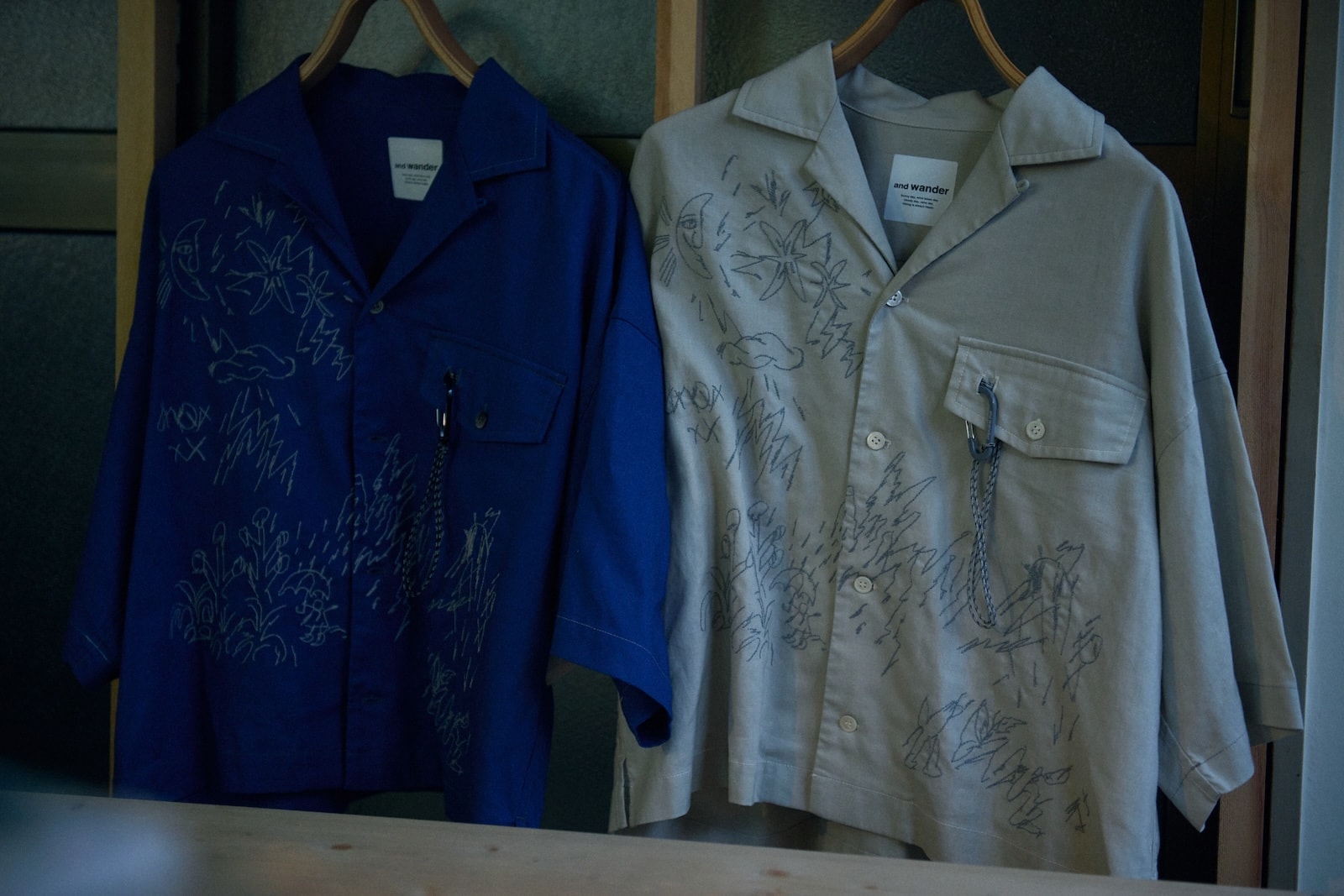
自然の営みや生態系を鈴木は"超巨大なモビール"と解釈。刺繍にはリフレクターの糸が使われており、暗闇で光が当たると浮かび上がる。
Suzuki has interpreted the workings of nature as a giant mobile. The embroidery uses reflective thread, making the images stand out when light shines on them in the dark.
――and wander OUTDOOR GALLERYで開催されるアートワーク展ではこれらのモチーフやオリジナルプリントの発端となった音楽や映像のインスタレーションのほか、キャンバス作品、オブジェ作品も展示される予定です。
目下、作品の制作中とのことでアトリエにお邪魔しているんですが、表から見えるショップスペースの奥には、こんな広い作業スペースがあるんですね。
SUZUKI:ここは、かつてプラスチックの加工場だった建物なんです。大型機械が残置されていて使い物にはならないけど、重すぎて外にも出せない。でも、その古びた佇まいが好きで、中を打ち抜いてシンセサイザーに変えようかな、とも思っています。それこそ、今回の展示でも、来場者がシンセサイザーを触って音を変えられるようなギミックを作っているんです。
――At the upcoming artwork exhibition at and wander OUTDOOR GALLERY, installations featuring the music and film that were the basis for these motifs, and original prints will be on display, along with canvas artworks and sculptural pieces. You are currently in the middle of production, which is why we have come to visit you in your atelier today. I noticed that beyond the shop space visible from the front, there’s actually this spacious workspace tucked away in the back.
SUZUKI: This building used to be a plastics processing factory. Some of the large machinery was left behind. It’s unusable now, but it’s too heavy to remove. But, I like the worn, aged aesthetic, and I’m thinking about hollowing one out and making it into a synthesizer. For this exhibition, I’m actually making a setup that will let visitors manipulate a synthesizer and change the sounds themselves.
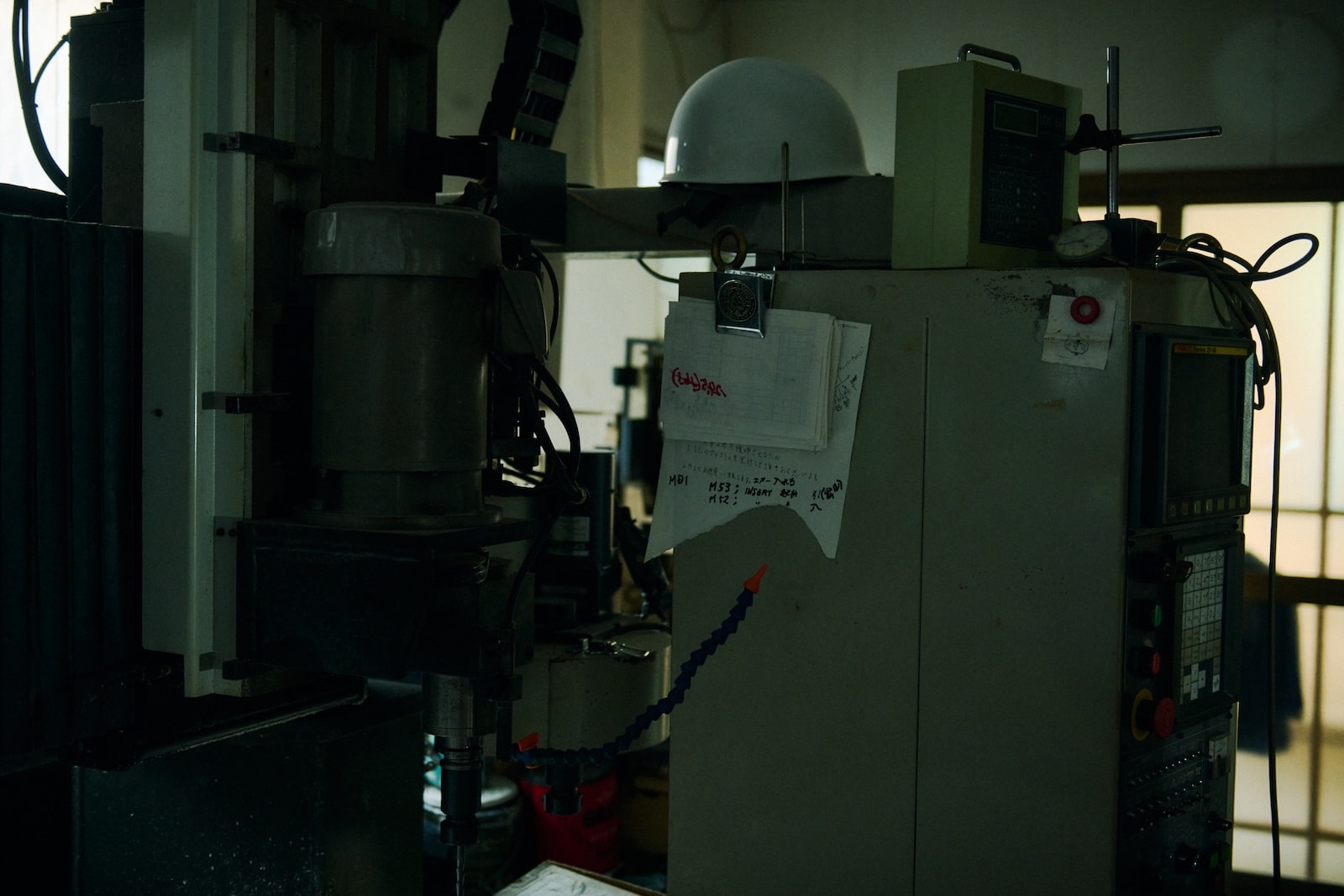
残置されていたという樹脂の加工機器。残置物も表現の材料のひとつとなる。
The resin processing machine that was left behind. This abandoned item is also used for artistic expression.
――インダストリアルな雰囲気の素材や道具、機械があふれるものづくりの環境です。ここで音楽制作からペインティング、シルクスクリーン制作までさまざまな制作が行われているのですね。
SUZUKI:そうですね。音楽制作はモジュラーシンセサイザーとパソコンで作りますが、シルクスクリーン制作やペインティングはアナログに手を動かしています。シルクスクリーンの版は専門業者に依頼することもできますが、僕は自分で作っていて、ペインティングをするキャンバスも木枠から自分で作ってキャンバス地を張っています。
――シルクスクリーンの版にしてもキャンバス張りにしても専門業者の方にお願いした方がほかの制作に費やせる時間も増えるのではないかと思うのですが……。
SUZUKI:地味な作業なんですけど、僕にとってはその時間がすごく豊かなんです。できる限りすべての工程を自分でやりたい。自分が作ることで必ず小さなノイズの様な部分が生まれます。そこを楽しみたいのと、TシャツにしろZINEにしろ、パンクカルチャー由来のDIYに影響を受けてきたので。その感覚はずっと大事にしたいなと。
――今回の作品には、900mm角の大きなキャンバスに描いたドローイング作品やシルクスクリーンのポスターを考えていると聞きましたが、多くの工程がアナログな工程を経て生み出されているのですね。
――This artisanal space is full of materials, tools and machines with an industrial feel to them. You do all sorts of work here, from music production to painting and silkscreen.
SUZUKI: Yes. For making music I use my modular synthesizer and computer, but for silkscreen and painting, it’s all analog, using my own hands. For silkscreen, I could get a specialized vendor to make the screens for me, but I like to make my own. And for painting as well, I make my own canvases, stretching the canvas cloth over a wooden frame that I also make myself.
――I would have thought that getting someone else to make the screens for silkscreen, or stretching the canvases, would leave you with more time to spend on other work…
SUZUKI: They’re not very exciting tasks, but for me, the time spent doing them is rewarding in itself. I want to do as much of all the processes myself. By doing them myself, I’m always going to create those small noise-like imperfections and I enjoy that. Also, whether it be T-shirts, or Zines, I’ve been influenced by the DIY ethos of punk culture. I always want to value that.
――I heard that for this exhibition you’re planning on including drawings on large 900mm square canvases as well as silkscreen posters. A lot of the processes involved in these are very analog.
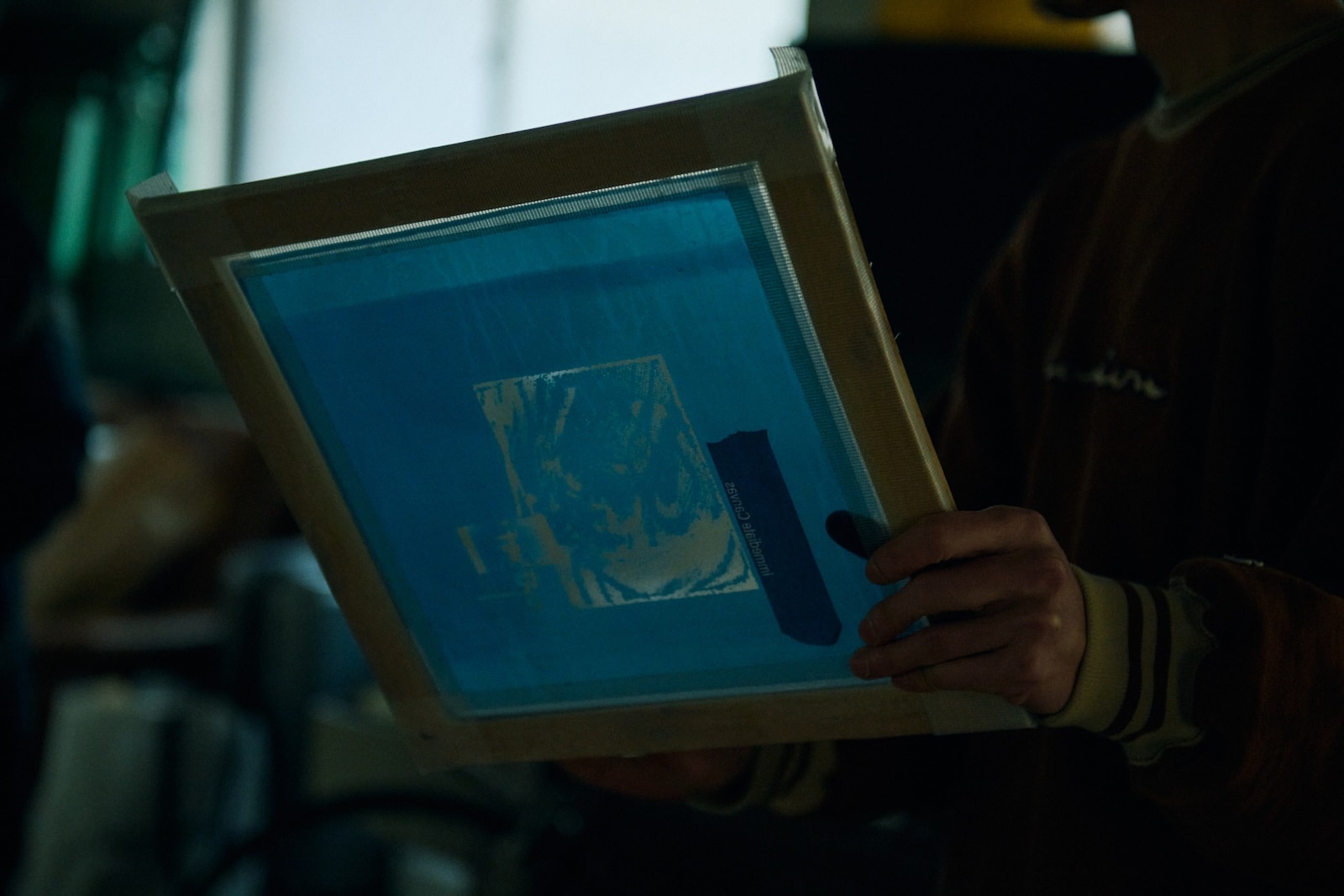
今回の「GAMORI」展では、シルクスクリーンのプリント作品も展示販売予定。
Silkscreen print works will also be on display and for sale at the GAMORI exhibition.
SUZUKI:今回、「樹脂」という素材からも自然を考えています。樹脂、プラスチックって昨今、環境問題の観点からマイナスの側面ばかりが取り上げられがちですが、本来すごく有益で面白い素材でもある。さまざまな議論がなされてますが、自分なりの回答を提示したくて。あえて自然をテーマにした展示の中で積極的に使おうと思いました。
SUZUKI: I’m also thinking about nature from the perspective of resin as a material. Resin, or plastic, is often talked about in a negative context these days due to environmental issues, but really it can be a very beneficial and interesting material. There’s lots of debate going on, but I want to present my own answer. That’s why I thought of intentionally using such materials in this exhibition, which is about nature.
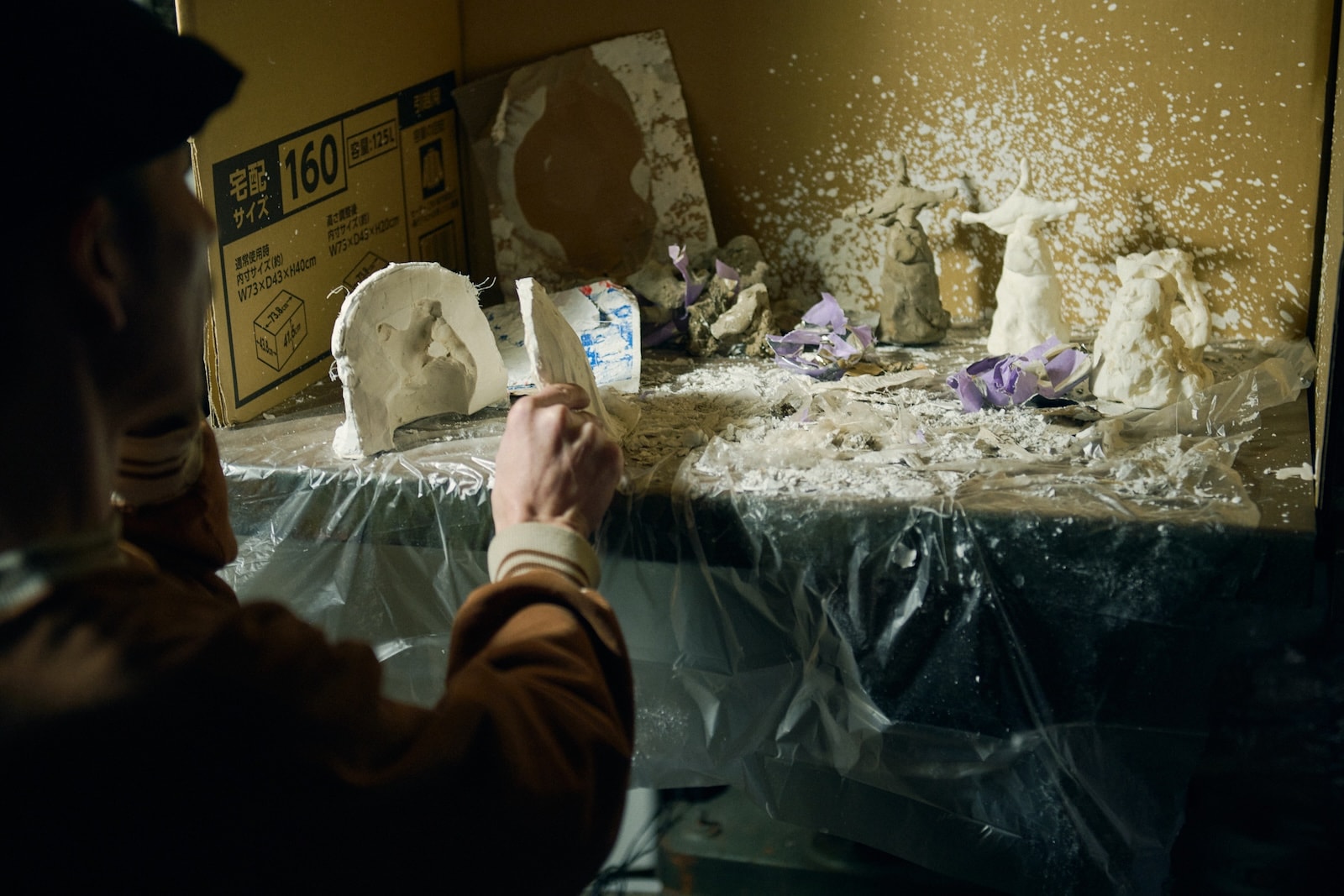
樹脂を使ったオブジェを試作中。鉱物のようなオブジェから、真鍮で作った花を組み合わせる予定。「人工物と自然が交差するようなイメージです」
Experimenting with creating art objects from resin. A combination of a range of pieces, from objects that resemble minerals, to flowers made from brass. “I’m picturing an intersection between manmade objects and nature.”
――今回の展示では、会期中にライブペインティングともいえる制作途中の姿も見せてくれる予定です。
SUZUKI:僕は、現場感をすごく大事にしていて。キャンバス作品もオブジェ作品も、当日までに大きく変わる可能性もある。事前に完成した量産可能な作品ではなく、すべてがユニークな1点もの。それらが生態系のように空間のなかで関連しあうプロセスそのものが展示になるかな、と思っています。
――At the exhibition, you’ll also be presenting your creative process in what could be described as a form of live painting.
SUZUKI: A sense of physical immediacy is very important to me in my art. Both my canvas works and sculptural pieces can change a lot, right up to the day of the exhibition. They’re not reproducible items that are prepared in advance, they are all unique one-of-a-kind items. I believe that the process of them interacting with each other within the space they share, almost like an ecosystem, is itself part of the exhibition.
PROFILE
MASAYOSHI SUZUKI
Painter / Editor / Synthesist
ペインティングと電子音楽制作を主軸とした表現活動を行う。自身の活動の傍ら、さまざまな展示企画・構成に携わり、2020年からは編集者としてバイクカルチャーとアートの多様性を探求するプロジェクトHi-Wheelersをスタート。2025年春からは自身の活動拠点として、ショップスペースを併設した実験場「Studio P.R.O」を運営。アーティストたちが集い、交流することで生まれる反応を創造的な表現に変えるためのハングアウトでもある。
Masayoshi Suzuki’s artistic practice centers on painting and electronic music. He also actively organizes and curates a wide range of exhibitions, alongside his own work. In 2020, he founded Hi-Wheelers, a social media project that examines bicycle culture and art from a multifaceted and three-dimensional point of view. In Spring 2025, he set up an experimental independent studio called “Studio P.R.O”. The studio has an adjoining shop space and is a base for Masayoshi Suzuki’s own work, while also serving as a hangout for artists where “inter-reactions” are converted into creative expression.
edit・text Tomoko Yanagisawa
photography Shinsaku Yasujima
translation Yuko Caroline Omura